


WEBTOON: Manga, Comics, Manhwa
NAVER WEBTOON
I spend a lot of time reading on my phone, so I judge a comics app by more than the size of its library. I want chapters to open without fuss, pages to remain comfortable during a long session, and my place to be easy to recover when I switch between short breaks and a full evening of reading. WEBTOON: Manga, Comics, Manhwa has become one of the more convincing choices for that routine because it combines a very large community with a reading format designed around phones.
My overall impression is positive, but it is not simply a matter of finding the biggest collection and tapping install. The experience depends on how you read, how often you use the app, and how comfortable you are with a catalog that mixes free reading with optional purchases. I found it especially appealing for discovering ongoing series, following creators, and filling small gaps in the day. Readers who want a traditional page-by-page manga shelf, a completely offline-focused experience, or no commercial interruptions may prefer a different kind of comics app.
How WEBTOON feels during everyday reading
Quick access matters more than flashy presentation
The first thing I notice in a mobile comics app is whether it gets me from opening the app to the next chapter quickly. WEBTOON is built around browsing, so the home experience naturally encourages discovery rather than acting like a simple personal bookshelf. That can be useful when I want something new, but it also means I sometimes spend longer choosing a series than I planned to.
Related News
How Android Auto Merges Tech with Our Driving Lives

How Opera News: breaking & local Keeps You Informed Locally

How Tile Explorer - Triple Match Reflects Our Digital Order Obsession
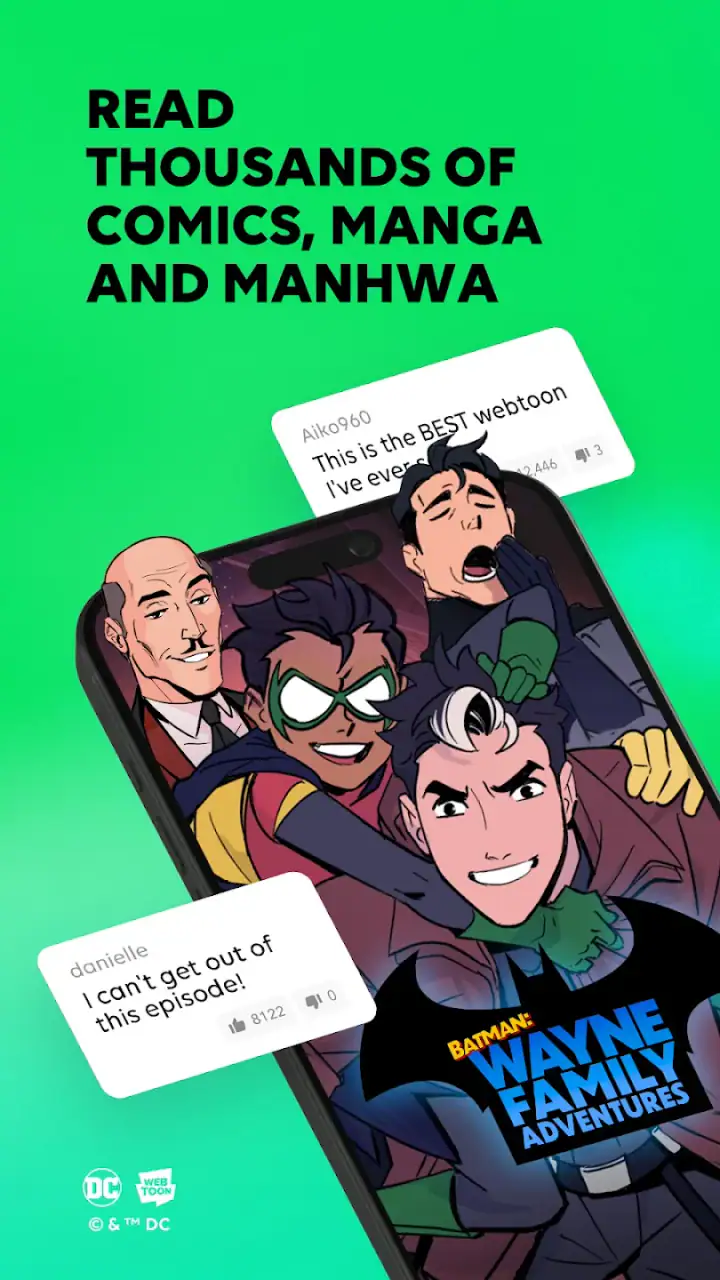
Once I have decided what to read, the vertical format makes the basic action straightforward: I move down through the episode instead of repeatedly changing pages. This suits a phone particularly well. I can read with one hand on a train, while waiting for an appointment, or during a short break without needing a large screen or a separate reader. The format also gives creators room to control pauses and reveals, which can make comedy, suspense, and dramatic timing work differently from printed manga.
That convenience comes with a clear trade-off. If you prefer the visual rhythm of facing pages, double-page artwork, or a physical-volume layout, the continuous scroll may feel less satisfying. I also find myself reading faster in this format, which is not always an advantage. A carefully drawn panel can pass by quickly unless I deliberately slow down and give the artwork attention.
Related News

Why WhatsApp Messenger Still Makes Everyday Communication Feel Easy

Jurassic World: The Game Is the Better Dino Tycoon for Strategic Players

Threads in Real Life: Who Should Join, Lurk, or Leave

How SHEIN Turned Shopping Into an Endless Content Feed

How to Make Fortnite Feel Smarter on Mobile

Should You Switch to Microsoft Outlook on Mobile?
What affects perceived speed
In normal use, the app feels most responsive when I already know the series I want and my connection is behaving well. Browsing a long catalog is a different kind of speed test: the app presents many covers, categories, and recommendations, so the experience can feel busier than a minimalist reader. That is not necessarily poor performance, but it does make the first few minutes more demanding on my attention.
Images are the central part of every reading session, so network conditions matter more here than they would in a text-only app. On a strong connection, moving through an episode feels natural. On a weak or changing connection, I am more aware that the app is loading visual material rather than simply displaying text. For that reason, I prefer opening a series before I know I will be offline, rather than waiting until the moment I am already underground or traveling.
My practical tip is to use the library as a starting point instead of repeatedly searching from the front page. Saving series I genuinely follow reduces the amount of browsing and makes the app feel lighter in daily use. It also separates “I want to read this now” from “this cover looks interesting,” which helps prevent the catalog from becoming overwhelming.
Gallery
Long sessions and heavier browsing
WEBTOON is at its best when I read one or two episodes and move on with my day. Longer sessions expose more of the compromises that come with a large, image-heavy service. Scrolling through several episodes can make me more conscious of battery use, screen brightness, and the amount of visual content being loaded. I would not call that unusual for a comics platform, but it is worth considering if you regularly read for hours.
Heavy browsing is more demanding than simply opening a saved series. Jumping between genres, checking creator pages, previewing multiple titles, and returning to an unfinished episode creates a busier workflow. I often solve this by deciding on a small reading queue first. That approach reduces repeated loading and keeps the session focused, especially on an older phone where switching between content-heavy screens may feel less immediate.
Another useful habit is to avoid keeping the app open indefinitely when I have finished reading. Closing it after a long session gives the phone a chance to recover resources, and it avoids returning later to a crowded state. I do not see this as a special flaw in the service; it is simply sensible behavior for any app that continuously displays large amounts of artwork.
Stability and recovering my place
A comics app becomes frustrating when a small interruption makes me lose the episode or forces me to hunt for the last panel I read. WEBTOON’s basic value depends on keeping series, episodes, and reading progress organized well enough that I can return later without treating every session like a new search. In my routine, that makes it more practical than reading individual chapters through a browser, where tabs and browsing history can become messy quickly.
Recovery is also about the phone, not only the app. If I switch to a message, receive a call, or lock the screen for a while, I expect to resume without reconstructing my place from memory. I still recommend noting the series and episode when reading in an unstable connection, particularly if you are about to travel. That small precaution is useful because image-based reading is more sensitive to interrupted loading than plain web pages.
The large audience is reassuring in a practical sense. The app has a 4.5 average from around 4.3 million ratings, with roughly 104 thousand written reviews, and it has passed 100 million installs. Those figures do not guarantee that every device will behave identically, but they do show that this is an established reading platform rather than an experimental catalog with a tiny user base.
Older phones, operating systems, and storage choices
The app supports Android 8.0 and later, which keeps it accessible to many devices that are not new. That does not mean every supported phone will deliver the same comfort. A lower-end handset may be perfectly adequate for occasional episodes but less pleasant when I browse for a long time, switch rapidly between series, or keep the screen bright for hours.
On a phone with limited free space, I would pay attention to how much reading material and temporary content I keep around. I prefer managing my reading queue instead of treating the app as a permanent archive. This is especially important for people who use several large apps, take many photos, or have a device that already warns about storage. Keeping the phone reasonably clear can help the whole system feel more responsive, not just the comics reader.
Screen size changes the experience too. On a compact phone, vertical episodes are easy to follow because the content is designed to move downward, but detailed artwork may require more stopping and zooming with the eyes. On a tablet, the larger display can make art more comfortable, although the phone-first scrolling rhythm may still feel different from reading a printed book. I would choose the device based on portability versus visual comfort rather than assuming a larger screen automatically makes the app better.
Finding worthwhile series without getting lost
The strongest part of the service for me is discovery. It brings manga, comics, and manhwa into one place, so I can move between styles without maintaining separate apps for every format. That variety is valuable when my reading mood changes. One day I may want a short comedic episode; another day I may want a continuing story that rewards regular visits.
The weakness is the same variety. A large catalog can make recommendations feel like a stream rather than a carefully arranged bookstore. I get better results when I use a deliberate method: sample an episode, check whether the pacing suits me, save only the series I intend to follow, and remove titles that no longer hold my interest. This prevents the library from becoming a long list of abandoned experiments.
I also recommend judging a series by its update rhythm and episode length as experienced in the app, not only by its cover or premise. A title that works during a commute may not satisfy someone looking for a long uninterrupted reading session. Conversely, a story with compact episodes can be ideal for readers who rarely have more than ten minutes at a time.
Free access and the cost of convenience
The app is free to install, which makes trying it easy. The important question is how you feel about optional spending once you become invested in a series. In-app purchases range from twenty-nine cents to $199.99 per item, so the possible cost is not limited to a single small unlock. I would treat purchases as a budget decision rather than tapping automatically whenever a chapter is available.
That model suits readers who want to sample widely before spending anything, but it may frustrate people who expect every part of a large catalog to be immediately available without limits or interruptions. I find the best approach is to use the free access to test whether a series deserves a place in my routine, then decide whether paying for earlier access or additional reading fits my budget. If you are buying for a younger reader, the Teen content rating and the purchase range are both worth discussing before handing over the device.
Compared with a library app, WEBTOON is more focused on serialized discovery and creator-led digital reading. Compared with a traditional manga store, it feels less like owning volumes and more like following an active stream of episodes. A browser can be convenient for a one-off visit, but the dedicated app is better suited to returning readers who want their comics habit in one place. The right choice depends on whether you value ongoing discovery or a fixed, collection-based reading experience.
Who will enjoy it most
I would recommend it to someone who reads primarily on a phone, likes vertical comics, and wants a broad mixture of manga, comics, and manhwa without installing several separate services. It is also a strong match for readers who enjoy finding new creators and following stories over time rather than buying a complete printed run at once.
It works particularly well in small everyday moments. For example, I can open a saved series while waiting for coffee, read part of an episode, lock the screen, and return later when I have another few minutes. That pattern is more natural here than with a physical volume, and it avoids carrying another object. The app also fits a shared recommendation habit: friends can suggest a series, and I can sample it immediately instead of searching through a store shelf.
I would be more cautious about recommending it to someone who wants a distraction-free reader with no discovery feed, someone who dislikes scrolling, or someone who wants to permanently own a neatly organized digital library. Readers with very limited storage or older hardware should also begin with short sessions and watch how their device handles extended browsing. If your priority is archival ownership, a purchase-focused ebook or manga service may be a better match.
Developer, maturity, and current app details
NAVER WEBTOON develops the app, and its identity is closely tied to the community side of digital comics. That matters because the experience is not only about opening files; it is about returning to series, noticing new work, and participating in a large reading ecosystem. I enjoy that sense of movement, although readers who want a quiet personal shelf may find the social and discovery emphasis more noticeable than necessary.
The app was released on July 1, 2014, and the current version is 3.8.2. Its Teen rating makes it unsuitable to treat as an automatically child-friendly comics shelf. Parents should still look at individual titles and discuss purchases, because a broad catalog can contain very different tones and themes even when the app itself has one overall age label.
From a technical-access standpoint, Android users need version 8.0 or later. That is a reasonable entry point for a wide range of phones, but I would still keep the operating system updated when possible and avoid judging the app only by how it behaves on a very old or nearly full device. Performance is a combination of the reader, the connection, available storage, and the phone’s ability to handle long image-heavy sessions.
My performance verdict
After using it as a regular mobile reader, I see WEBTOON as a dependable choice for people who want convenient serialized comics rather than a digital replacement for a bookshelf. Its perceived speed is best when I follow saved series and avoid excessive catalog hopping. Its heavier moments come during long, image-rich sessions and broad discovery, where battery, storage, and device age matter more.
The app’s biggest practical strength is recovery of a reading habit: I can fit episodes into ordinary gaps in the day and return to a large range of stories without carrying volumes around. Its main friction is that the same large ecosystem that makes discovery exciting can also make the experience feel busy, and optional purchases require self-control.
My recommendation is simple: install it if your ideal comics session is a phone, a vertical scroll, and a series you can revisit whenever you have a spare moment. Start with free reading, build a small library instead of saving everything, and test longer sessions on your own device before committing to regular purchases. If you prefer page layouts, ownership, or a completely quiet reading environment, choose a more traditional manga reader instead. For everyone else, this is a capable and well-established way to make digital comics part of everyday life.
FAQs for WEBTOON: Manga, Comics, Manhwa
What is WEBTOON, and how does it work?
WEBTOON is a digital platform for reading comics, manga, and manhwa. It offers a diverse range of genres, including romance, fantasy, thriller, and more. Users can access a vast library of series and enjoy reading them on their mobile devices. New episodes are frequently updated, and users can even interact with creators through comments.
Is WEBTOON free to use, or are there in-app purchases?
WEBTOON is free to download and use, allowing users to read many series without any cost. However, the platform offers in-app purchases for additional features, such as fast pass options to access episodes ahead of their free release. Coins can be purchased to unlock these episodes early.
Can I create and publish my own comics on WEBTOON?
Yes, WEBTOON provides a platform for aspiring creators to publish their own comics. The 'WEBTOON CANVAS' section allows users to upload and share their work with a global audience. Creators can gain followers, receive feedback, and even monetize their content through ad revenue and other opportunities.
What devices are compatible with WEBTOON?
WEBTOON is available on both Android and iOS devices, and it can also be accessed via a web browser. The app is designed to work smoothly on smartphones and tablets, providing a user-friendly experience with easy navigation and high-quality image resolution for a seamless reading experience.
How often are new episodes released on WEBTOON?
The release frequency of new episodes on WEBTOON varies depending on the series and the creators' schedules. Some series update weekly, while others might have different schedules. The app provides notifications to keep users informed about new releases, ensuring that readers never miss the latest episodes.
Pros
- Vast library of diverse comics.
- User-friendly interface for easy navigation.
- Offline reading feature available.
- Regular updates with new content.
- Interactive community for feedback.
Cons
- Contains in-app purchases.
- Heavy on data usage.
- Ads can interrupt reading.
- Limited language options.
- Requires internet for some features.


